Gili Meno Turtle Sanctuary: A Bastion of Marine Conservation and Eco-Tourism in Lombok
GILI MENO, INDONESIA — Beyond the serene turquoise waters and the pristine white sands of the Gili Islands lies a silent, decades-long crusade to save one of the ocean’s most iconic species. Since its inception in 1995, the Turtle Sanctuary Gili Meno has served as a critical stronghold for thousands of endangered sea turtle hatchlings, battling the dual threats of human encroachment and ecosystem degradation.
A Legacy of Conservation
Founded by the visionary Abdul Hanan (locally known as Pak Bolong) and now spearheaded by his son, Roly, the sanctuary was born out of a dire necessity. “Our primary mission is to shield the turtle population from tangible threats such as illegal poaching, marine pollution, and habitat loss,” Roly stated during a recent briefing.
Gili Meno is a strategic nesting site for three distinct species: the Green Turtle (Chelonia mydas), the Olive Ridley (Lepidochelys olivacea), and the Hawksbill Turtle (Eretmochelys imbricata).
From Simple Pools to Integrated Conservation
The biological reality for sea turtles is harsh; in the wild, a hatchling’s survival rate is estimated at less than 1%. This grim statistic makes human intervention not just beneficial, but essential for the species’ survival.
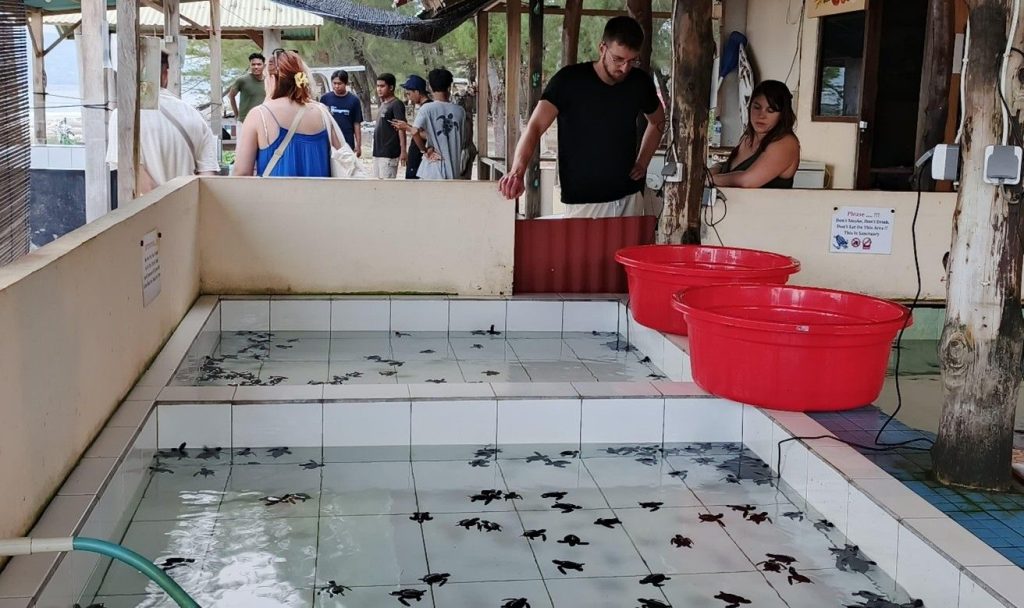
What began as a modest volunteer initiative with simple pools has evolved into an integrated marine conservation center. The facility now features:
- Modern Hatchling Pools: Where turtles are monitored until they reach a resilient age (6–8 months).
- Educational Zones: Designed to bridge the gap between tourism and environmental literacy.
- Systematic Nesting Protocols: Where eggs are safely relocated from natural beach nests to protected incubation areas for a 45–60 day period.
The Power of Community and Global Collaboration
The sanctuary’s success is a testament to the synergy between local communities, NGOs, and the BKKPN Kupang (Gili Matra Working Area). This collaborative framework ensures that conservation isn’t just a localized effort but a collective responsibility involving tourists and volunteers.
“Community involvement is the cornerstone of our success,” Roly emphasized. “They don’t just guard the nests; they educate the travelers who visit our shores.”
A Call to Action for Travelers
For the global traveler, the sanctuary offers a profound “edu-tourism” experience. Ceremonial hatchling releases are frequently held, allowing visitors to witness the poignant moment these ancient mariners return to the sea.
By visiting Gili Meno, travelers are encouraged to participate in a “plastic-free” lifestyle, as marine debris remains the leading cause of mortality for sea turtles globally.