Cidomo in Gili Meno: Eco-Friendly Traditional Transportation in North Lombok
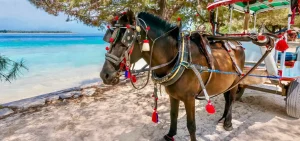
Cidomo in Gili Meno is a unique form of traditional transportation that remains an essential part of daily life and tourism on the island. Gili Meno is located in Pemenang District, North Lombok Regency, West Nusa Tenggara, Indonesia, and is widely known as a motor-vehicle-free island, making cidomo the primary means of transportation for both locals and visitors.
What Is Cidomo?
Cidomo is a traditional horse-drawn carriage, the name derived from cikar, dokar, and mobil. It uses rubber tires similar to those of a car, providing a smoother ride. In Gili Meno, cidomo is commonly used to transport tourists from the harbor to hotels, resorts, and other destinations around the island.
The Role of Cidomo in Gili Meno Tourism
As one of the most peaceful tourist destinations in North Lombok, Gili Meno promotes sustainable and eco-friendly tourism. The use of cidomo supports this concept by eliminating air pollution and reducing noise.
For many tourists, riding a cidomo is not just transportation, but a cultural experience that allows them to enjoy the island’s natural beauty at a relaxed pace.
Eco-Friendly Transportation in North Lombok
Gili Meno, along with Gili Trawangan and Gili Air, is recognized as a zero motorized vehicle zone. Cidomo transportation plays a crucial role in preserving clean air and maintaining the calm atmosphere that attracts visitors seeking nature, relaxation, and honeymoon destinations.
Cultural and Economic Value
Cidomo represents more than transportation; it is part of the local cultural heritage of North Lombok. Many cidomo drivers rely on this profession as their main source of income, making it an important contributor to the local economy.
The continued use of cidomo helps:
Preserve local traditions
Support community-based tourism
Strengthen the identity of Gili Meno as an eco-tourism destination
Challenges and Sustainability Efforts
Despite its benefits, cidomo transportation faces challenges, particularly regarding horse welfare and vehicle maintenance. Collaboration between the local community, tourism stakeholders, and the North Lombok government is essential to ensure ethical and sustainable practices.
Conclusion
Cidomo in Gili Meno, North Lombok is a symbol of environmentally friendly transportation and cultural preservation. Its presence enhances the island’s appeal as a tranquil and sustainable tourist destination. With proper management, cidomo will continue to be a valuable and iconic feature of Gili Meno tourism.