Saving the Best Beach in Lombok
Gili Meno has always held a special reputation among travelers. Unlike its more festive neighbors, this tiny island is where people go to find absolute quiet and pristine shores. It is, by many accounts, home to the best beach in Lombok.
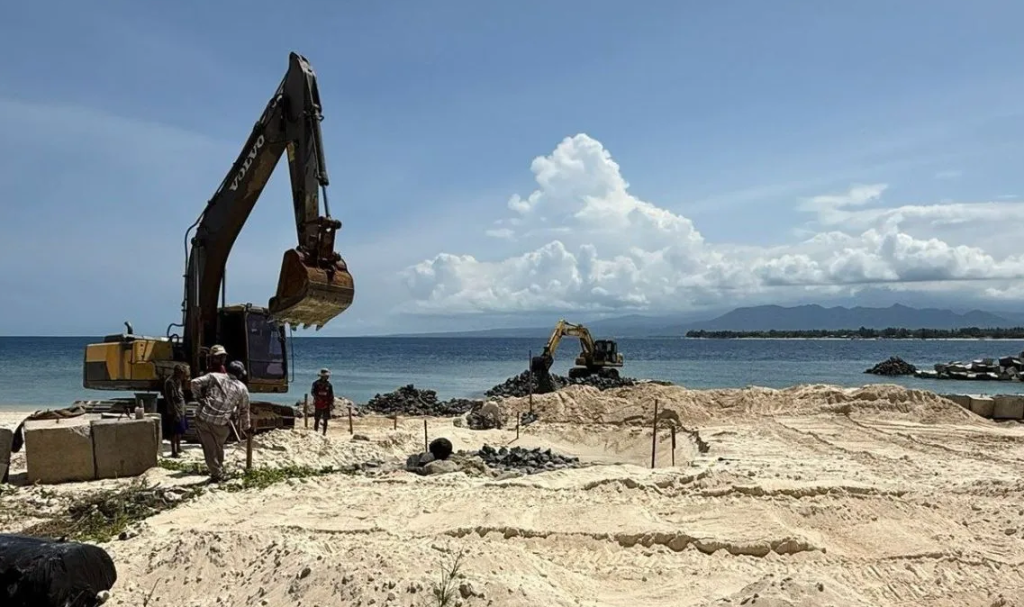
But maintaining a paradise like Gili Meno isn’t easy. Lately, rising sea levels and shifting weather patterns have brought a tough challenge to its shores: severe coastal erosion.
To fight back, a group of locals, environmental officials, and school children gathered on the island’s coastline on Friday, July 14, 2023. Their mission was vital, planting 100 Sea Pine (Cemara Laut) saplings directly into the sand to help hold the coastline together.
The environmental effort was part of the COREMAP-CTI (Coral Reef Rehabilitation and Management Program, Coral Triangle Initiative) project, funded by the Asian Development Bank (ADB), and carried out by the Indonesia Climate Change Trust Fund (ICCTF) under Bappenas.
Turning the Tide on Seasonal Erosion
For anyone planning a Gili Islands tour, the weather is usually the main focus. But for the people living in Gili Meno, Desa Gili Indah, Pemenang District, the changing seasons bring a different kind of anxiety.
According to the local Gili Meno Hamlet Head, Masrun, the island now faces severe tidal erosion about three times a year: specifically during the transition periods at the beginning, middle, and end of the year. High tides regularly push deep into the land, washing away the sand and damaging the beachfront.
While global climate change and rising water levels are the main drivers, high tourism density and heavy coastal activity also contribute to the ongoing erosion. This has threatened the very shores that define the best beach in Lombok.
That is why Sea Pines were chosen. These trees are highly compatible with Meno’s coastal characteristics and act as a natural barrier to hold back the waves and prevent further abrasion.
Keeping Gili Meno Green and Clean
The planting event itself drew key figures, including Sriyanti (Director of Marine Affairs and Fisheries at the Ministry of National Development Planning/Bappenas), Muslim (Head of the Marine Affairs and Fisheries Office of NTB), and Tony Wage (Director of ICCTF). But the real heart of the project was the local community and elementary school students who helped plant the trees.
The initiative was actually sparked by concerns from the Minister of National Development Planning during a previous visit to the island, prompting the allocation of COREMAP funding specifically to address Meno’s erosion problem.
For travelers looking for meaningful things to do in Gili Meno, seeing the island’s shift toward active eco-tourism is a huge draw. By keeping the beaches secure from erosion, Gili Meno is ensuring that Lombok tourism remains sustainable, preserving its quiet shores for years to come.